What personal or intellectual conflict first compelled you to begin writing the poems that eventually became Blaming Eve?
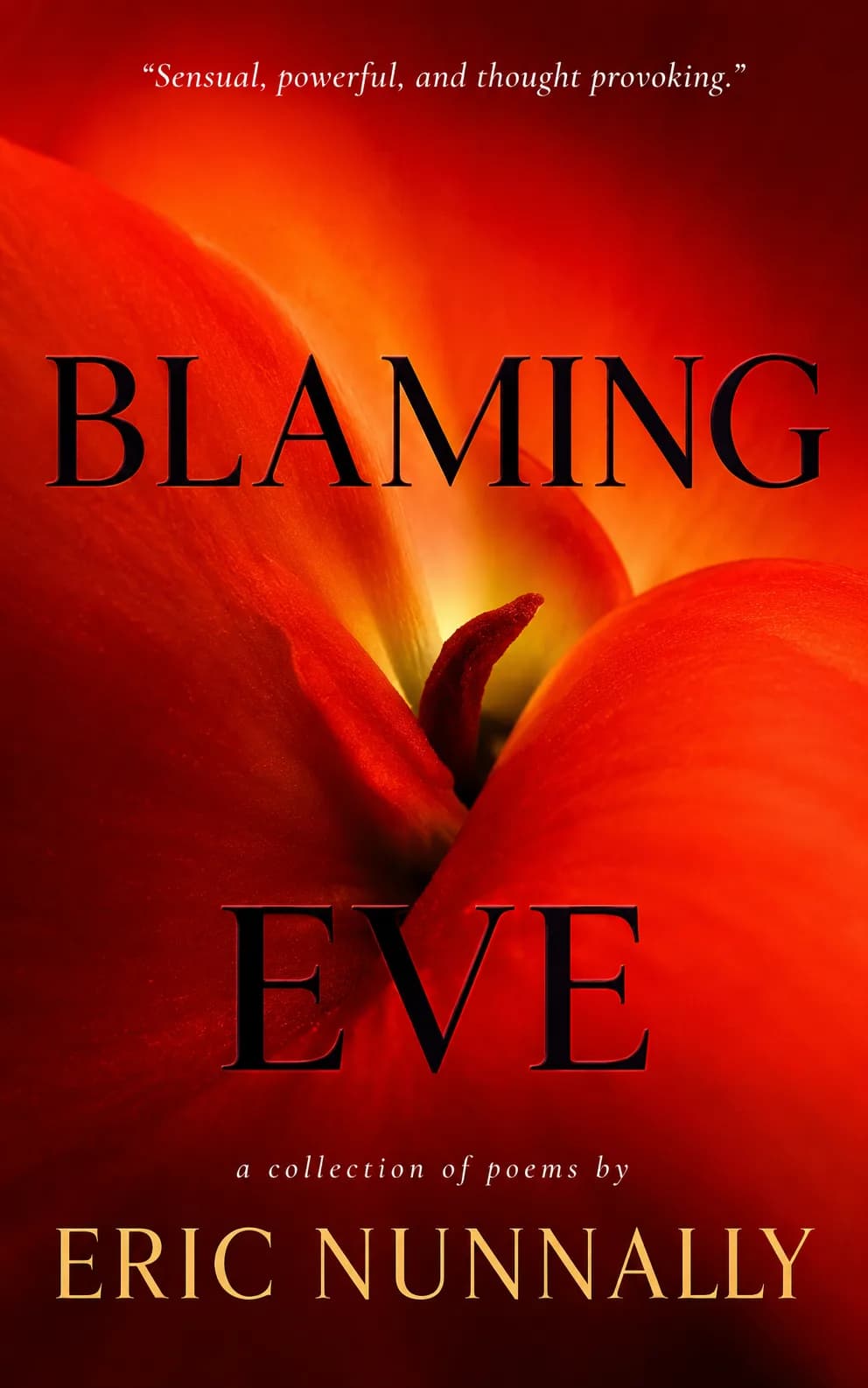
I get caught on the word conflict, because conflict is woven into life itself—tension, challenge, struggle, growing pains, unanswered questions. I cannot point to one particular personal crisis or intellectual disagreement that compelled me to begin writing the poems that eventually became Blaming Eve. If there was a governing conflict, it began with the most basic question: Who am I, and how does that answer measure against the person I appear to be in the world?
The intimate center of my early world was my father and my brother. Friends, relatives, school, and nearly everything else seemed to orbit that core. But I also inhabited an internal world—perhaps the same world viewed through a different and continually changing lens. I developed a relationship with that world through exploration, questioning, analysis, reflection, and eventually writing.
The question that both preceded and informed my understanding of myself was: Who is God?
In my own mind, the existence of God was no less certain than my own existence. I exist; therefore, God exists. It functioned almost as an axiom. But who God is became a lifelong exercise in faith, research, reflection, and introspection. The explanations handed to me were never sufficient. Beneath all my questioning was a simple resistance: why should someone else possess the authority to tell me who God is?
My first major source was the Bible. By the time I graduated from high school, I had read it from beginning to end, not for Sunday school, a class, or a reading group, but for myself—often on the train traveling to and from school. I had heard the familiar criticisms: contradictions, interpretive errors, mistranslations, deliberate corruptions, and the influence of King James. I read it anyway. I tried to put that noise aside and approach it earnestly, asking for discernment rather than merely searching for evidence to confirm what I had already been told.
What I discovered did not arrive all at once. Over time, I began to see the Bible as an introductory text—a primer through which one begins to recognize the patterns of human nature. Eventually, I came to believe that every person is, in a sense, a living Bible. If there is nothing new under the sun, then our own lives contain the lessons, failures, betrayals, acts of love, and opportunities for understanding that we require. The Bible was the record of a people determined to preserve the good, the bad, and the ugly so honestly that their history became a transcript of human life itself.
So the conflict behind Blaming Eve was not one isolated event. It was the continuing struggle to understand who I was, who God was, and how I should live in the space between those questions. In the absence of a more elaborate purpose, I came to believe that my work was to observe, to question, and to bear honest testimony to what I saw.
At one time I might have described that purpose as worshipping God in spirit and in truth. Today I might put it more plainly: to keep working toward an honest relationship with myself, to live as lovingly as I can, and to honor what is sacred within me and within other people. The poems became one record of that effort.